Before RFQ
Send the brief with unit count, destination, target scope, intended use, and site status so the first quote is not just a headline number.
Evidence & spec brief
For evaluators who need to brief an owner, finance partner, or an approval committee. It summarises the Vaultwerk Dome Series engineering record, certification references, SKU range, logistics, and quote-scope tiers in one place — sourced and bounded, not inflated.
A note on honesty: the diagrams below are Vaultwerk schematic drawings, and the photographs are production-side reference projects — site locations and client names are withheld by policy, and no image is presented as a named client case. The inquiry-stage document pack includes available SGS RoHS pages, GB 8624 fire-report pages, layout drawings, and quote-specific logistics evidence. CE / EU DoC language is not used as a public certification claim until original EU documents are verified.
This page is built for the internal evaluator who joins after the first sales conversation. It gives each stakeholder a fast way to see what is known, what is quote-specific, and what still belongs to local engineering or compliance review.
| Evaluator | Question they are trying to answer | What this page gives them |
|---|---|---|
| Owner / investor | Is this a credible manufacturer-direct supply path with usable evidence? | Production scope, spec table, evidence pack availability, and bounded claims. |
| Finance partner | What budget items sit outside the base quote? | Quote tiers, buyer-supplied items, logistics boundary, and RFQ inputs. |
| Engineer / code consultant | Which standards exist today, and which still need local review? | GB 8624 B1 scope, SGS RoHS scope, destination-test caveats, and project-specific sign-off. |
| Procurement lead | Can every supplier be compared on the same basis? | Scope tiers, document status matrix, and the due-diligence checklist. |
Each figure below is a production test result or reference condition. A local engineer signs off on what a specific site requires — the spec is the starting condition, not an installed-performance guarantee.
| Attribute | Reference value | Boundary |
|---|---|---|
| Wall / roof module | 18 cm solid graphite-EPS module, interlocking joinery | Production spec — assembly detail confirmed per project drawing |
| EPS core conductivity | λ = 0.032 W/(m·K); core RSI 5.6 ≈ US R-32 | Core material baseline — installed assembly R-value is project-specific |
| Fire classification | GB 8624-2012 B1 (C-s3,d1) | Chinese standard report — not EN 13501-1, not ASTM E84, not a CE fire class |
| Wind | 12-class typhoon reference | Production reference condition — local engineer signs off per site |
| Seismic | 8-class arch-structure design rationale | Design rationale — not a magnitude test report; site-specific review required |
| Dome connection | 1150 mm Dome Series connection module | Dome-to-dome only; connection-node detail is quoted per project |
| Container reference | 2.5-6 sets per 40HQ, model-dependent | Exact loading is confirmed per quoted SKU and packaging revision |
Factory documentation currently supports a narrow, document-by-document evidence chain: SGS RoHS / material-safety evidence, a China GB 8624-2012 B1 fire classification report, and factory drawings for selected layouts. These documents are an evidence base for your local code consultant — they are not a substitute for destination approval.
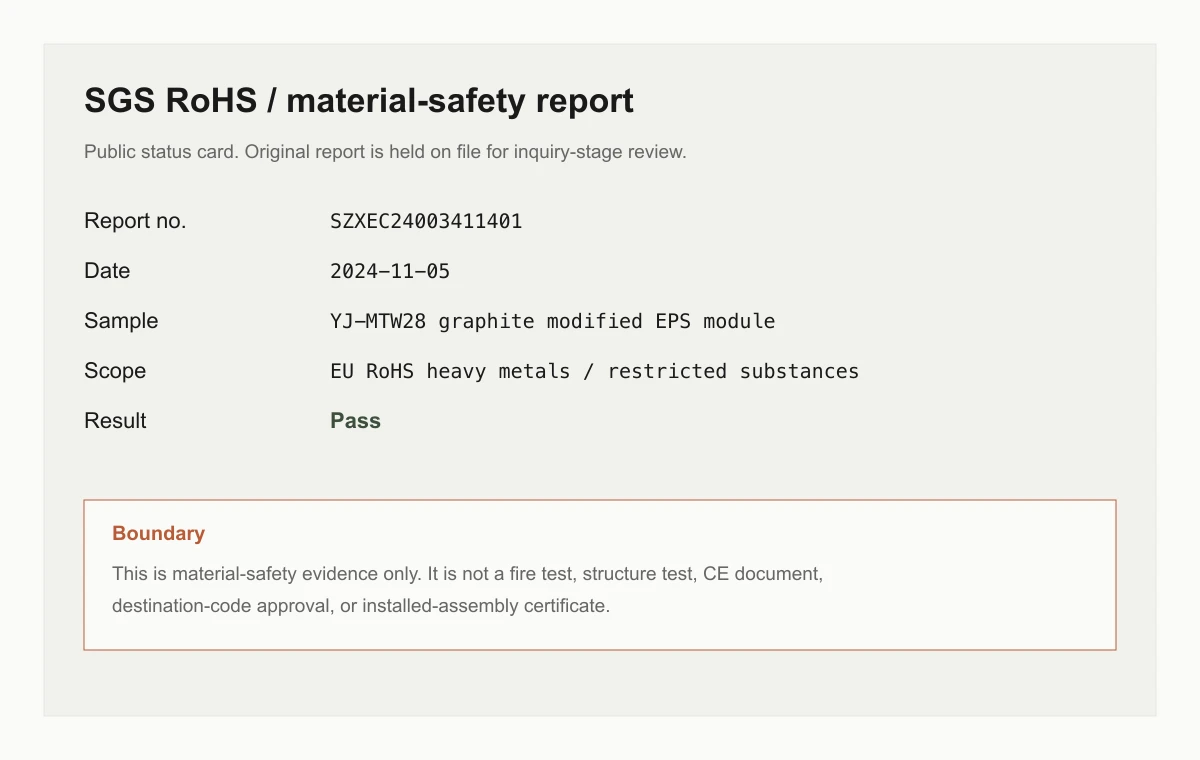
Destination tests are almost never interchangeable: a Chinese GB 8624 result does not map one-to-one to EN 13501-1, and CE marking does not demonstrate compliance with North American codes. North American projects typically need ASTM E84 and, for combustible wall assemblies, NFPA 285; Canada uses CSA A277 / ULC-S102; Australia uses an AS/NZS 3959 BAL assessment. We hand over the factory documents and can introduce destination-side compliance consultants; we do not warrant destination compliance.
See the full reasoning in the prefab dome house guide and the supplier due-diligence checklist.
Use this matrix to separate evidence that exists today from items that must be scoped for a destination market. It is designed to reduce RFQ ambiguity, not to replace local legal, engineering, or code advice.
| Document / pathway | Current status | How a buyer should use it |
|---|---|---|
| SGS RoHS / material-safety report | On file — SGS report SZXEC24003411401 (2024-11-05) | Heavy-metal / RoHS evidence only. It is not fire, structural, or destination-code approval. |
| GB 8624 B1 fire report | On file — China GB 8624 report 202201000206 (2022-04-18) | China GB 8624-2012 B1 (C-s3,d1). Do not read this as EN 13501-1, ASTM E84, or a CE fire class. |
| CE / EU Declaration of Conformity | Not used as a public CE claim yet | Current files do not replace an EU DoC. Verified EU documents are requested before any public CE claim. |
| ASTM E84 / NFPA 285 / CSA A277 / AS/NZS 3959 | Project-specific path | Can be scoped where the order and destination justify it; not currently held as standing Vaultwerk certifications. |
| Floor plans and SKU drawings | Available for selected layouts | 28 / 33 / 40 / 44 m² and Dome Series connection drawings are shared for the quoted layout. |
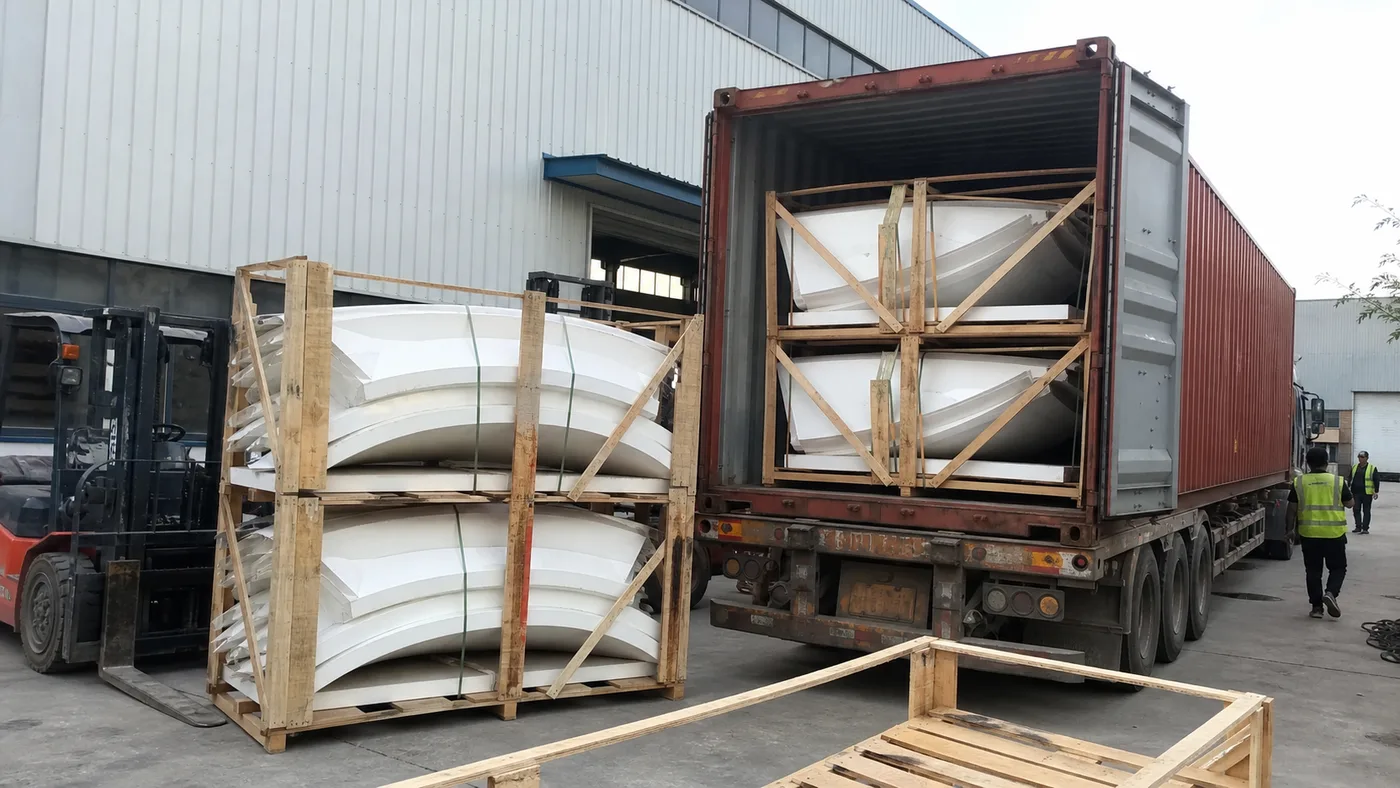
| Container-loading evidence | Reference visual now shown; real shipment photos remain quote-stage evidence | Exact load depends on SKU, packaging revision, export reinforcement, and destination route. |
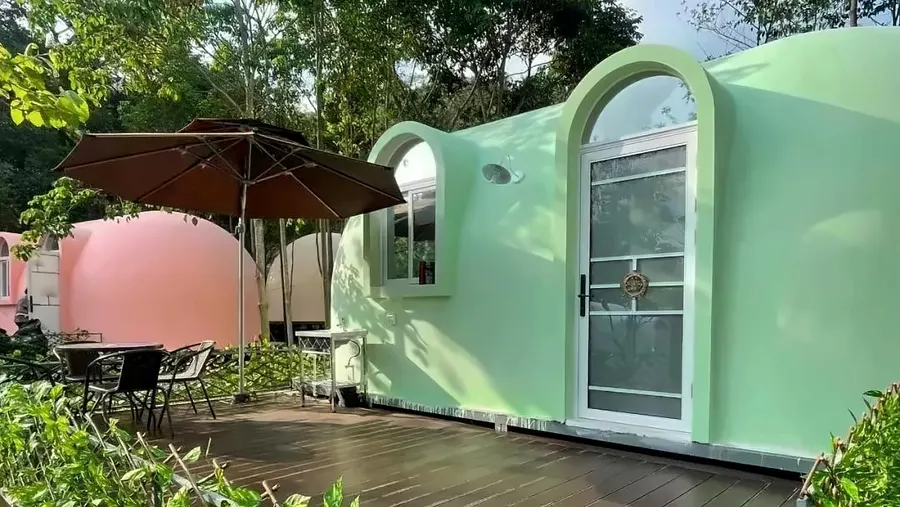
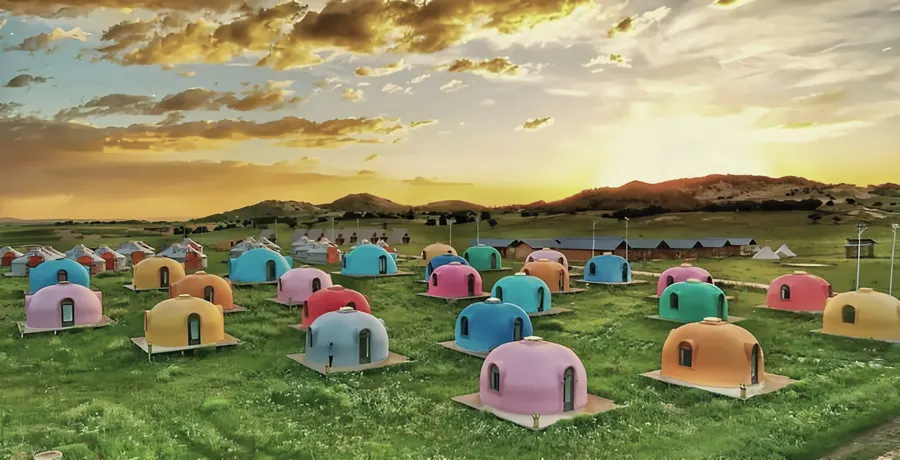
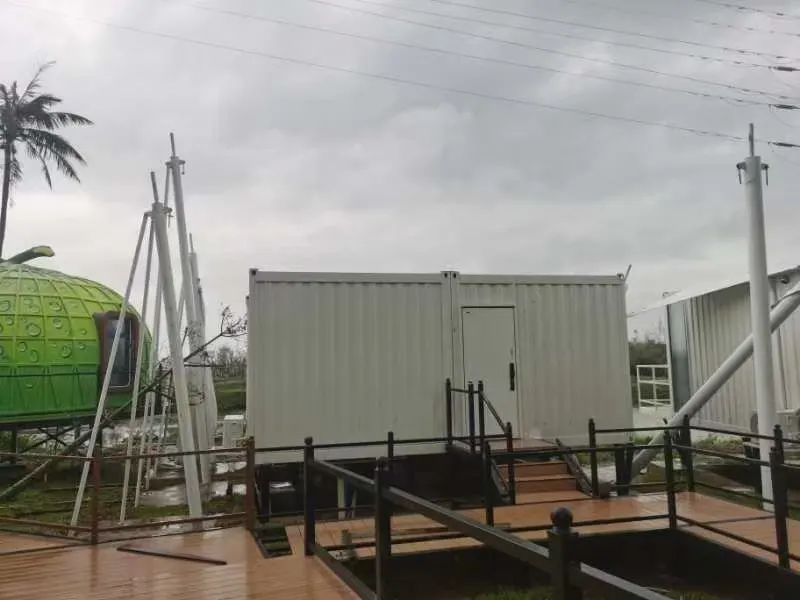
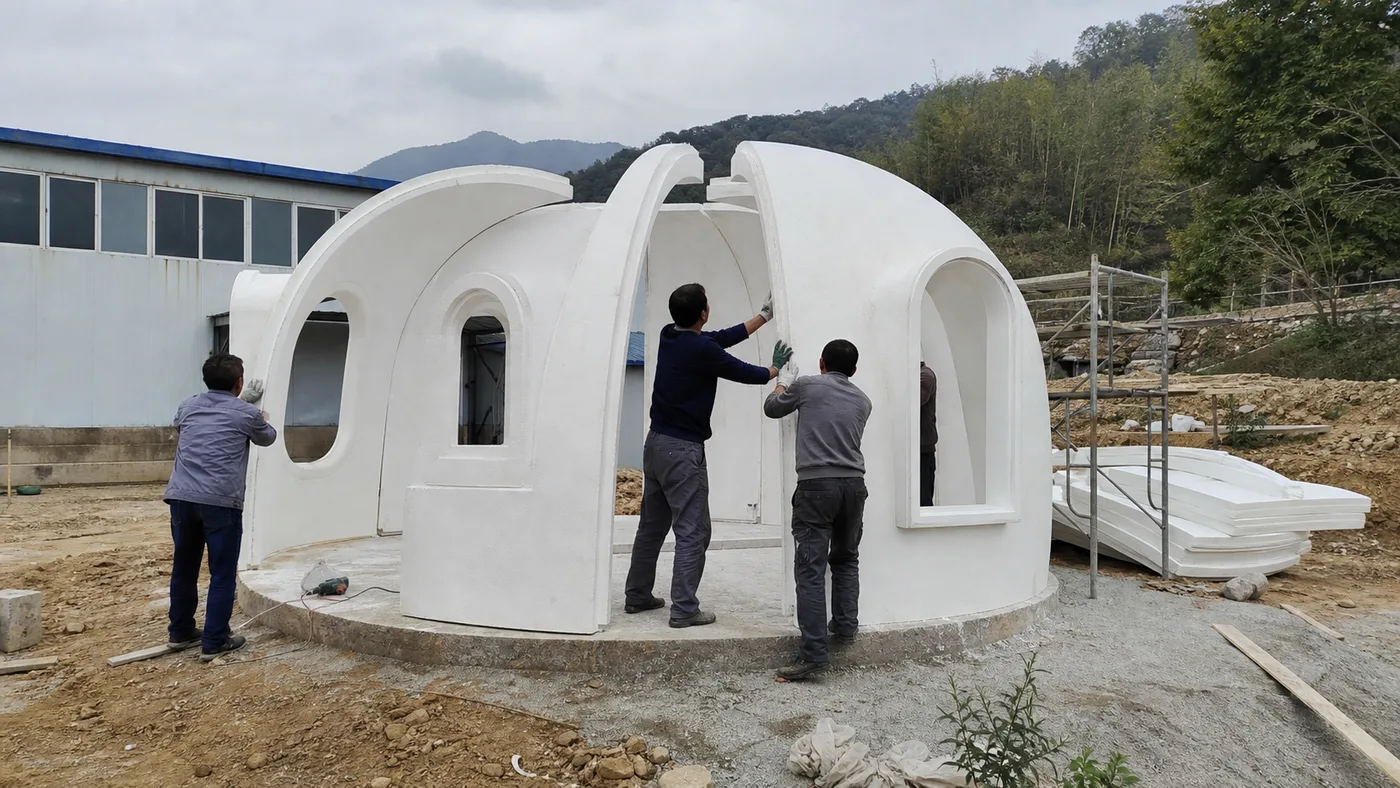
Production-side reference projects — what shipped units look like deployed, fitted out, and standing in weather. Site locations and client names are withheld by policy; project documentation specific to your scenario is shared at inquiry stage.
Shipped units deployed and in operation at production-side reference projects.
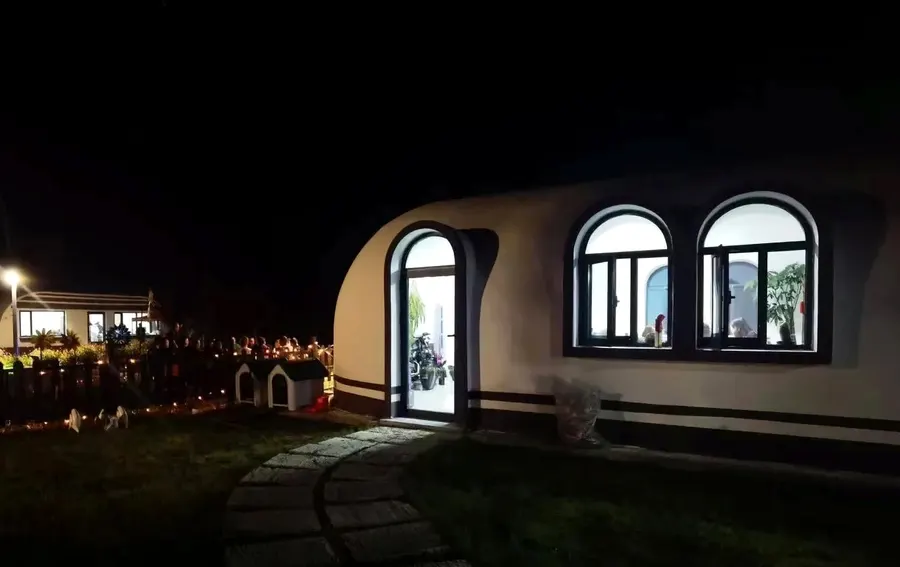
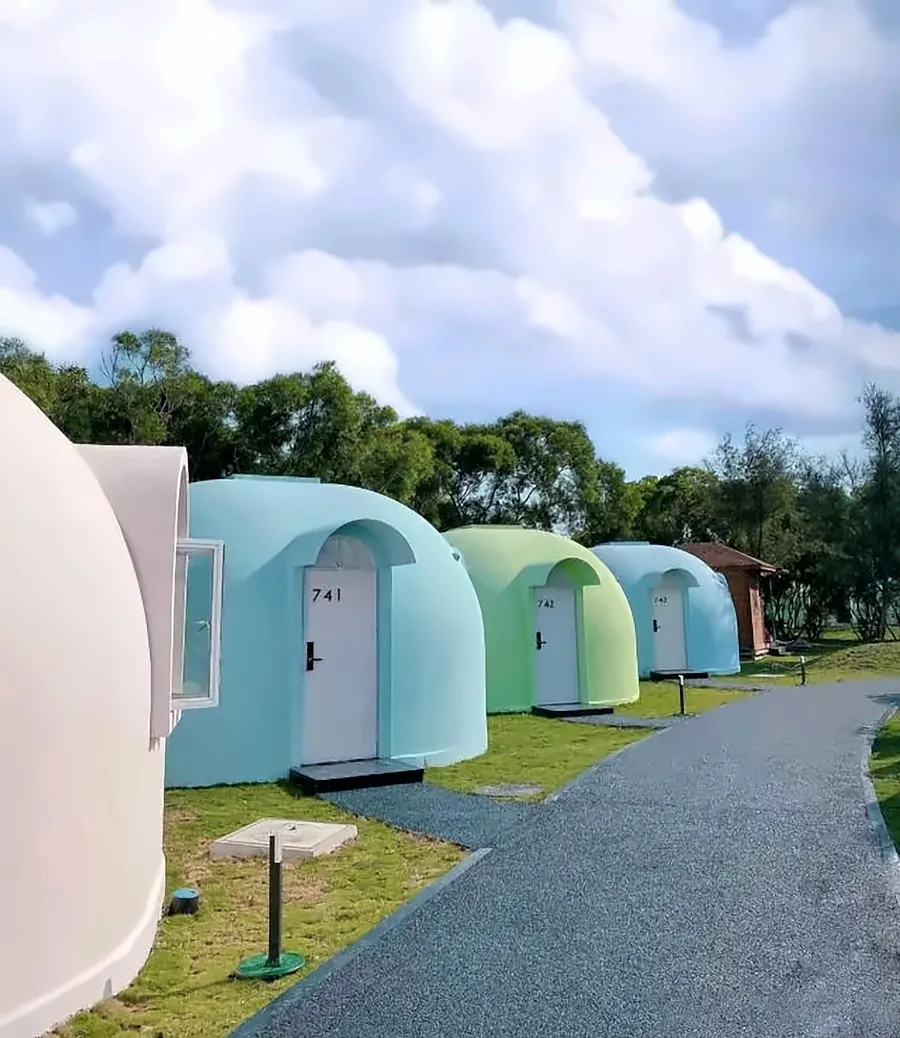
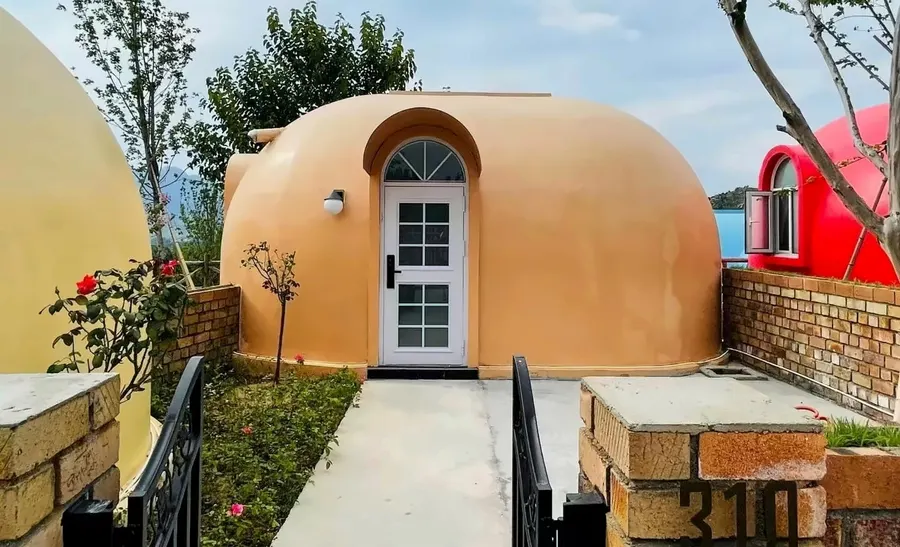

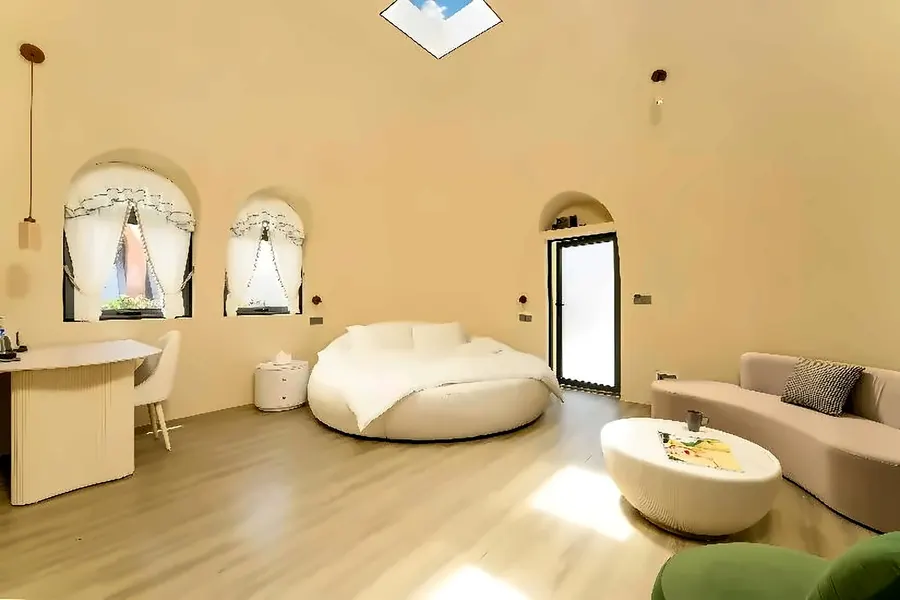
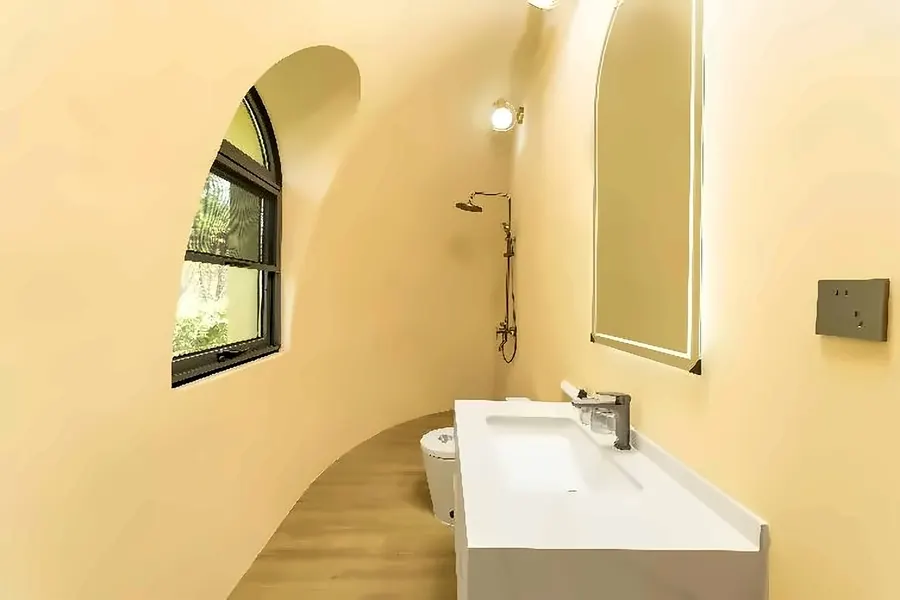
Fitted interiors inside the shell curve — more interior photography on the Dome Series page.




Field-state records, not load ratings — site-specific structural review per local code still applies.
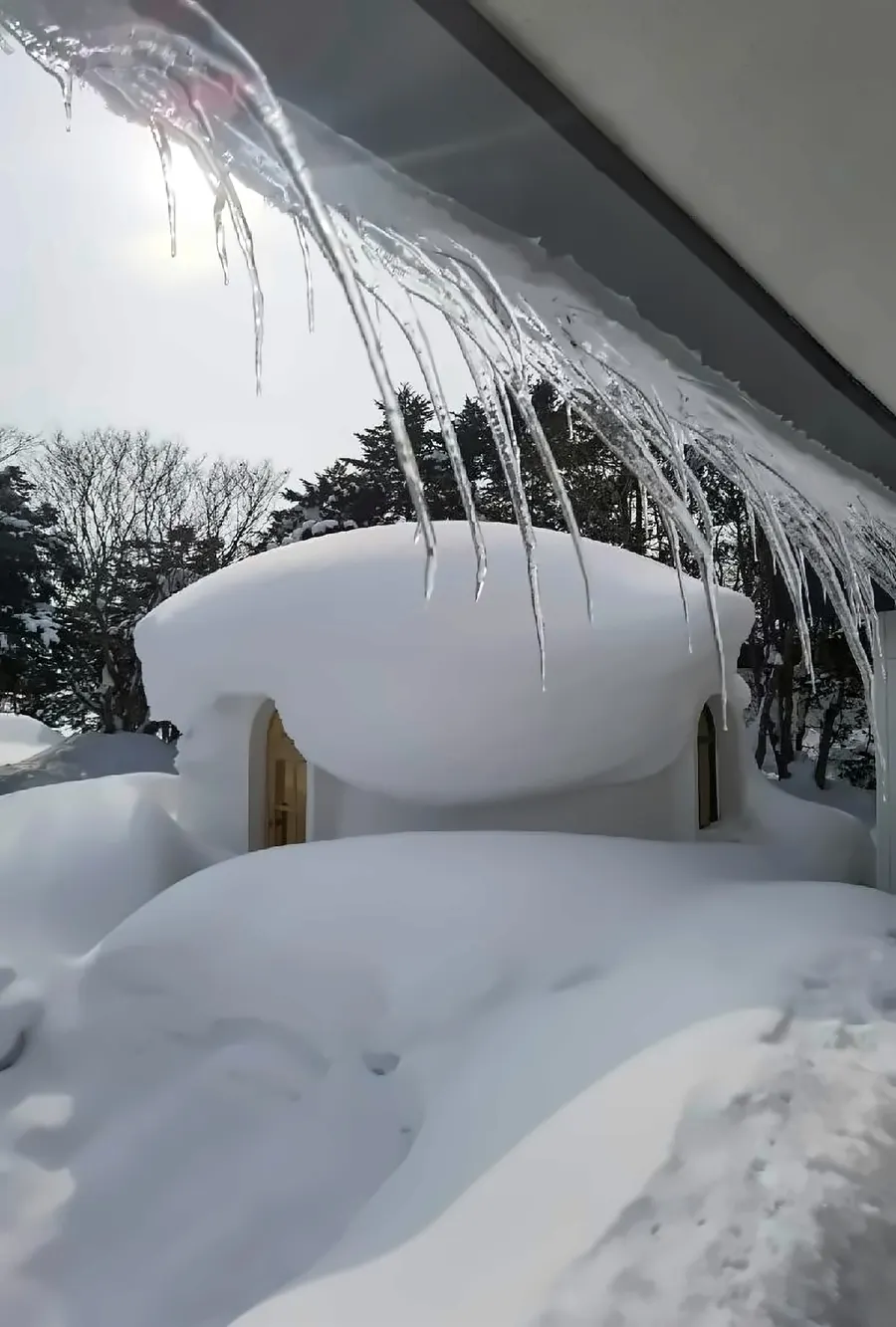
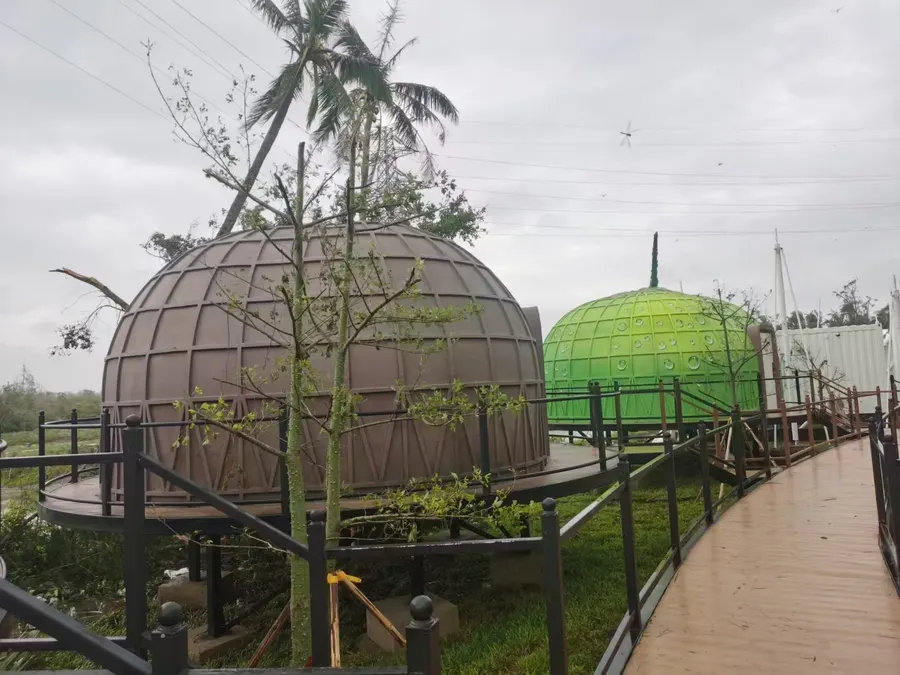
The Dome Series ships in four standard footprints — 28, 33, 40, and 44 m² — plus combined configurations. Unlike fabric or geodesic domes, different standard sizes can be physically connected at the structural envelope into a single multi-volume building. The manufacturer confirms that standard Dome Series footprints connect on a common 1150 mm module; the specific pairing and connection-node detail are set in the project drawing set. Connection is Dome-to-Dome only — Dome Series units are not structurally joined to box or A-frame products.
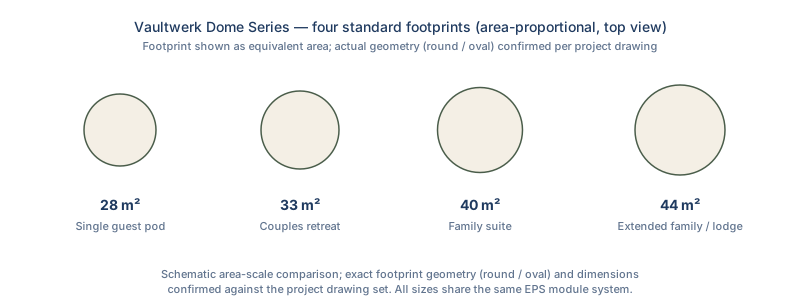
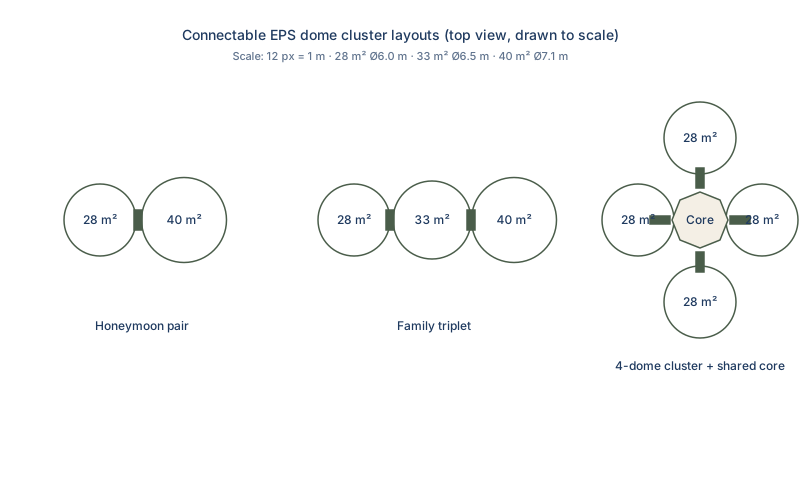
Multi-unit resort planning detail: prefab dome house for glamping resorts.
Shells ship in 40-foot high-cube containers. Per-SKU loading depends on the footprint, the current packaging revision, and any export reinforcement framing — confirmed on each quote against the destination port rather than published as a fixed number. Export reinforcement framing is a separate line item, required for most international destinations. Destination port handling, customs, duties, inland freight, and crane access are the buyer's responsibility and are budgeted before the unit quote is signed.
Vaultwerk quotes by tier so two offers can be compared on the same basis. Require every shortlisted supplier to quote the same tier against the same buyer-supplied items list.
| Tier | Typically included | Typically separate |
|---|---|---|
| Shell-only | EPS modules, structural joinery + hardware, mesh, mortar, coating, factory docs | Foundation, MEP, glazing labour, interiors, assembly crew, destination certification |
| Ready-to-move-in | Shell scope + basic interior finishes, basic MEP rough-in, glazing per drawing | Foundation, assembly labour, HVAC commissioning, certification applications |
| Turnkey | Ready scope + on-site assembly with factory supervisory support | Local general contracting + certification via a buyer-engaged local partner, separately quoted |
Lifecycle cost math: EPS vs PVC dome TCO. Cold-climate envelope detail: insulated dome house for cold climates.
A price discussion is useful only when every supplier is using the same scope boundary. After your team reviews the shell-only, ready-to-move-in, or turnkey pricing logic, use this evidence brief to ask whether the quote is backed by the right documents, drawings, logistics assumptions, and local-compliance path.
Send the brief with unit count, destination, target scope, intended use, and site status so the first quote is not just a headline number.
Check whether each supplier separates factory materials, export packing, freight, local works, destination testing, and buyer-supplied items.
Ask for the report pages, layout drawings, container plan, payment boundary, and local consultant path that match the actual destination.
For a specific project, the following are shared during quotation:
Share unit count, destination, intended use, and target scope. Vaultwerk routes each inquiry to the right quote and production review path within one business day.