prefab dome house
Prefab Dome House Guide: EPS Modular Specs, Sizes, Kits & Quote Scope
Prefab dome house buyer's guide — EPS module specs, SKU sizes, kit inclusions, certifications, and quote-scope reference for resort and prefab teams.

A prefab dome house is a factory-built modular dome system planned around repeatable shell components, shipping scope, and site assembly rather than a one-off stick-built structure. In the Vaultwerk Dome Series, that prefab system is an EPS modular dome house: the envelope is built from solid expanded polystyrene modules, not a fabric membrane or a geodesic frame kit.
This guide is written for resort developers, hospitality project teams, B&B and Airbnb operators, dealers screening prefab dome suppliers, and individual buyers planning a permanent backyard or guest unit. It is a procurement reference, not a checkout-price page. If the question is “what should I actually compare across EPS dome suppliers before I send an RFQ?” — this is the worksheet.
Vaultwerk manufactures the Vaultwerk Dome Series in China, scoped per project by unit count, destination, scope tier, and certification requirements. The chapters below cover who buys these units, what is actually in the box, the engineering record behind the EPS envelope, the standard SKU range, how units can be physically combined, and the certification and quote-scope language a serious buyer needs.
Request Quote — or use the checklists below before you contact any vendor.
The 30-second decision frame
If this page is forwarded to an owner, finance partner, or a project committee, the useful summary is this short table. An EPS dome house is not the right answer for every dome project. Each row identifies a procurement question and the conditions under which an EPS dome system tends to be the better-fit asset.
| Decision question | Other path tends to win when… | EPS dome house tends to win when… |
|---|---|---|
| Project tenure | The site is seasonal, leased short-term, or designed to be dismantled. | The site is permanent or long-lease, and the asset is held 10+ years. |
| Capex stance | The lowest possible day-one unit cost is the binding constraint. | The buyer can trade higher capex for lower lifecycle and replacement risk. |
| Envelope longevity | A recurring fabric-cover replacement cycle is acceptable in the operating model. | The buyer wants no recurring envelope-replacement event over the hold period. |
| Year-round occupancy | Shoulder-season or summer-only operation is acceptable. | Year-round or near-year-round occupancy is central to the revenue plan. |
| Layout flexibility | Standalone independent units meet the brief. | Linked or clustered SKU layouts (suites, family connectors, shared cores) matter to the brief. |
| Certification depth | Local approvals are light, or temporary structure pathways apply. | Permanent-building certifications and destination-specific testing will be required. |
The rest of the article unpacks each row into procurement language, then closes with quote-scope wording you can paste into an RFQ.
What a prefab dome house kit includes — and what it doesn’t
A prefab dome house kit should be evaluated as a quoted project scope, not as a one-click DIY geodesic dome kit. For Vaultwerk, the most useful buyer phrase is shell package: the factory side supplies the EPS modular envelope and listed shell materials, while the buyer or local project team confirms foundation, utilities, permits, local labour, and destination compliance.
| Quote element | Usually inside the shell package | Usually outside or project-specific |
|---|---|---|
| Envelope | EPS modules; structural joinery; connection hardware; mesh, mortar, exterior coating, and factory-specified finish materials. | Local foundation engineering, anchors, waterproofing detail at the slab or deck, and any local code uplift. |
| Openings | Doors and windows only where included in the project drawing and quote. | Alternate glazing, local-rated windows, window installation labour, and destination-specific thermal or fire requirements. |
| Documentation | Factory documents for supplied materials: a China GB 8624 B1 fire report and an SGS RoHS / material-safety report (CE / EU DoC not claimed until verified). | Local permit applications, stamped engineering, ASTM / NFPA / CSA / AS/NZS testing paths, and occupancy approval. |
| Assembly | Factory packing list, shell components, and supervisory support where quoted. | Site crew, lifting equipment, tools and consumables, weather delays, MEP trades, interiors, HVAC, sanitary fixtures, furniture, and FF&E. |
This is why a kit price, a headline dome house cost, or any “dome house kit” listing only becomes meaningful once its scope is named. A buyer comparing kits should ask every vendor to mark what is included, what is excluded, who installs each layer, and which costs remain local before treating a headline price as comparable.
Who buys EPS dome houses (4 personas)
EPS dome buyers cluster into four practical personas, each with different procurement priorities, decision cycles, and reference data points. Recognising which persona a project sits in changes the questions that should be sent to suppliers in round one.
Resort developers and hotel groups. This persona drives the largest EPS dome orders by unit count and is the primary audience for procurement-grade vendor material. Glamping is no longer a fringe segment. Grand View Research sizes the US glamping market at USD 829.4 million in 2025, projected to USD 2,055 million by 2033 at a CAGR of 11.9 percent over the 2026–2033 forecast period.1 Hotel groups have moved on the segment in parallel: Marriott acquired the Postcard Cabins brand in December 2024, adding 29 properties and more than 1,200 cabins to its portfolio;2 Hilton announced an exclusive partnership with AutoCamp in February 2024;3 and Hyatt opened a World of Hyatt alliance with Under Canvas across 13 US locations in July 2024.4 Some modular-resort vendors position glamping as a lower-capex alternative to conventional resort development, though specific capex differentials are project- and site-specific and depend on the destination market, land cost, foundation system, and certification depth. Resort buyers ask about unit count tiers, lead time, shared-space planning, and certification depth before they ask about price per square metre.
Independent glamping camp operators. Smaller operators (5–20 units, often single-site) are buying into the same market trend that lifted ADR — industry data from Glamping Show Americas 2025 places the industry-wide average daily rate at roughly $251 per night, with dome structures specifically ranging from around $120 to $800 ADR depending on positioning.5 These operators care about per-unit installed cost, foundation flexibility on raw land, and whether the supplier can issue scope-tier quotes (shell-only vs ready-to-move-in vs turnkey) without bundling them into a single opaque number.
B&B and Airbnb hosts. Smaller-volume buyers (one to three units) typically install an EPS dome as a permanent guest unit, backyard rental, or year-round STR room rather than a seasonal pop-up. The relevant comparison set is cabins and pods — a category that accounted for over 43 percent of glamping revenue share in 2025 globally.6 For this persona the procurement questions are heavier on local code, foundation, utility hook-up scope, and warranty than on lead-time-at-scale. A future permanent glamping cabin use case article (coming soon) will go deeper on this segment.
Personal buyers. Owners building a personal guest unit, studio, retreat, or hardened backyard structure are the smallest order size but the fastest decision cycle. The key procurement questions are foundation pre-work, assembly responsibility, climate fit, and clarity about what is not in the shell quote. Buyers in cyclone- or bushfire-prone regions need to read the certification chapter carefully — full coverage for Australia and cyclone-prone regions (coming soon) is planned as a separate region-specific guide.
What you’re actually buying (definition + Vaultwerk Dome Series scope)
An EPS dome house is a prefabricated modular dome whose envelope is built from expanded polystyrene (EPS) panels, factory-cut to a curved geometry, assembled on-site through interlocking joints, then finished with mesh, mortar, coatings, doors, windows, and project-specific interiors. Unlike fabric domes that rely on a tensioned membrane stretched over a steel or aluminium frame, the EPS modules themselves form both the structure and the insulation of the wall and roof envelope.
The category sits inside a much larger industrial trend. The global modular construction market was valued at roughly USD 101.2 billion in 2024 and is projected to grow to USD 107.6 billion in 2025, with modular projects delivering structures 20 to 50 percent faster than traditional methods while cutting overall project costs by up to 20 percent.7 The wider prefabricated housing market sits in the USD 143–177 billion range for 2025 across reporting agencies.8 EPS dome systems are a small specialised subset of that market: they apply prefab assembly logic to a dome geometry, which is itself a niche but established hospitality and resort building type.
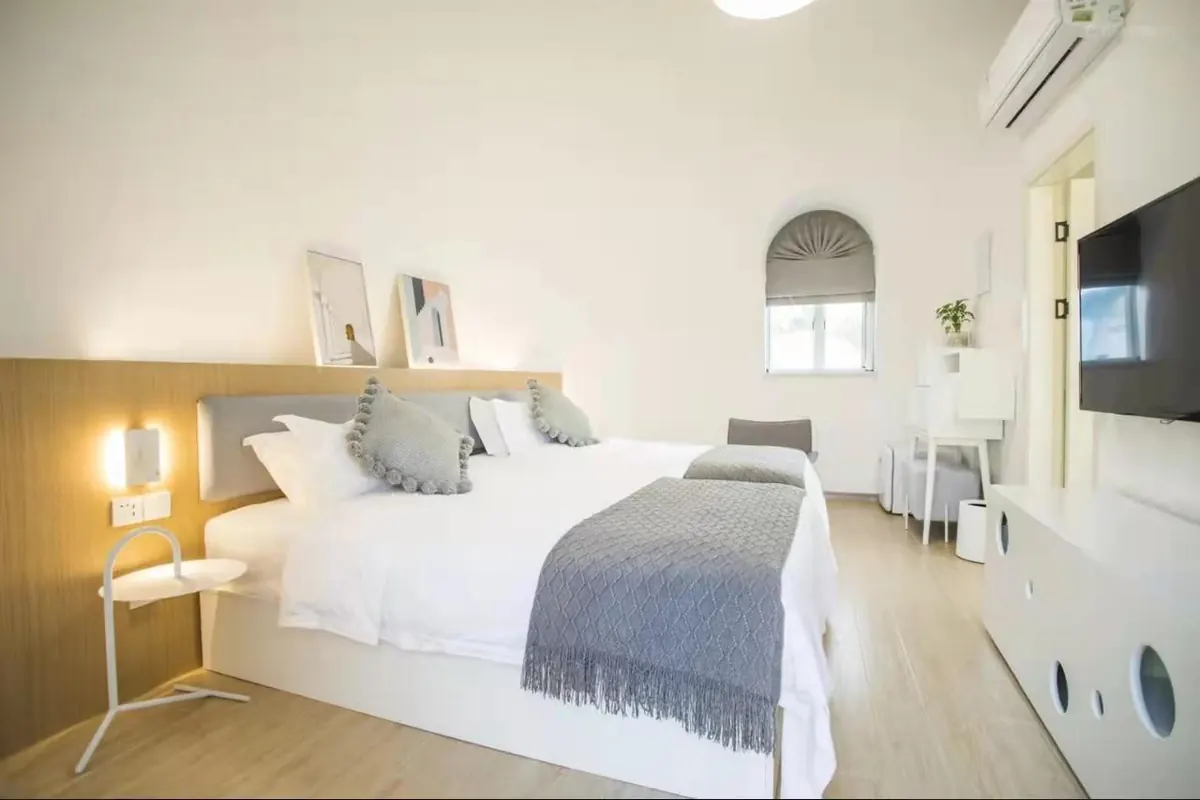
Vaultwerk Dome Series scope. Vaultwerk operates three series under one umbrella brand — Vaultwerk Dome Series (EPS modular domes), Vaultwerk Cabin Series (box-type prefab cabins), and Vaultwerk A-Series (A-frame cabins). This guide covers the Dome Series only. Within the Dome Series, the standard configuration uses 18 cm EPS modules assembled on-site with interlocking joinery and finished with mesh, mortar, and coatings. Standard SKUs and physical connection options are covered in the chapters below; the other two series are out of scope for this guide.
The factory baseline quote for a Vaultwerk Dome Series unit is structured as shell + materials (EPS modules, structural assembly components, listed finishing materials, doors and windows where included, mortar, mesh, basic coatings). Interiors, plumbing fixtures, HVAC, foundation, local utility connection, and site work are typically scoped separately — see the quote-scope chapter for the exact boundary language buyers should require.
EPS module engineering proof (18 cm + B1 + R-value)
“Engineering proof” in a procurement context means four things: the geometry of the module itself, the fire classification it has been tested to, the thermal performance the assembly can be modelled at, and the acoustic and impact behaviour of the closed-cell envelope. Each of these has third-party data behind it, and each requires hedged language because the test that exists in factory documentation is not always the test that satisfies the destination market.
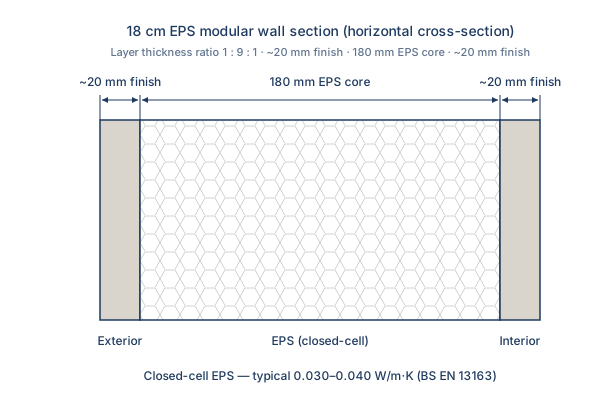
Module geometry. The standard Vaultwerk Dome Series wall and roof module is an 18 cm expanded polystyrene panel, factory-cut to the dome’s curvature and detailed for interlocking, mortise-and-tenon-style joinery on site. The 18 cm thickness is the primary insulation layer of the envelope; finish layers (mesh, mortar, exterior coating, interior render) sit on either face and contribute to weatherproofing, fire detailing, and surface durability rather than to insulation. The module-and-joinery system is what differentiates an EPS dome from a fabric dome — the envelope is the insulation, rather than a fabric cover stretched over a separately specified liner.
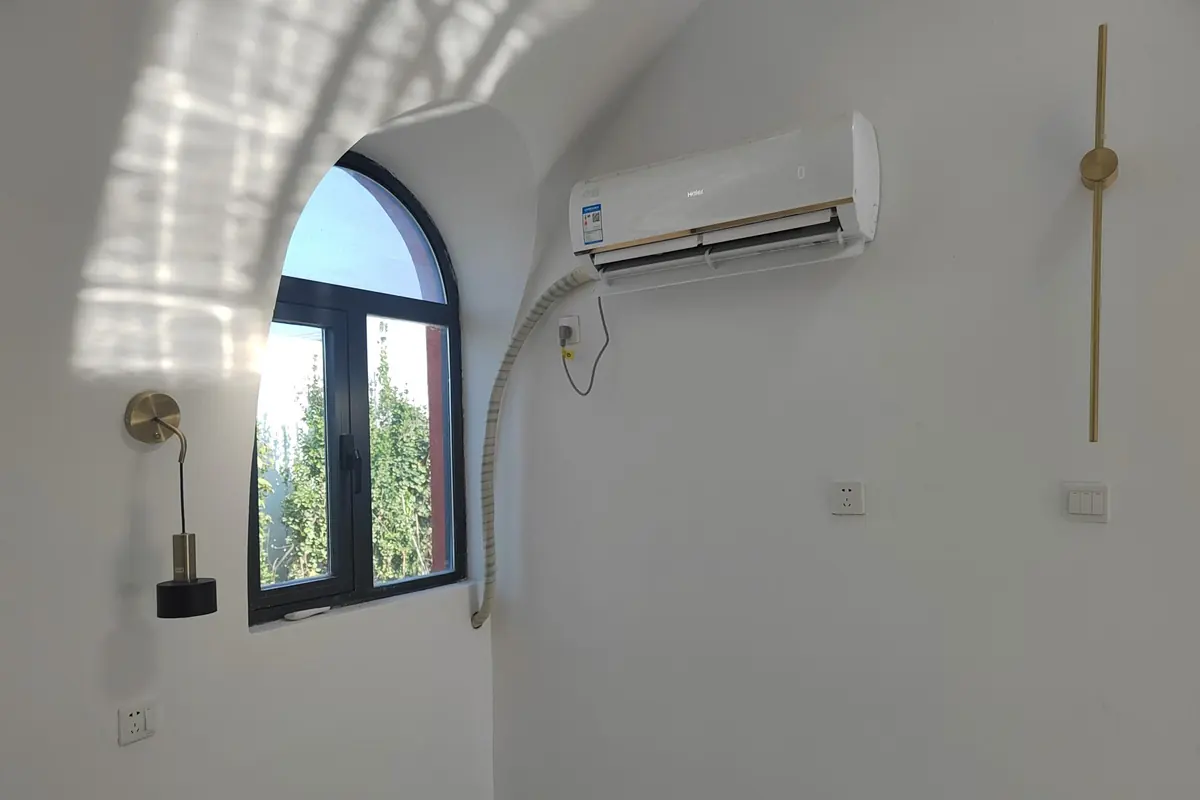
Fire classification. Factory documentation cites a B1 classification under the Chinese national standard GB 8624 for the EPS module. This is the Chinese building-material fire classification system; it is not the same as the European Euroclass system defined in EN 13501-1. Public technical references make this explicit: there is no direct one-to-one correspondence between the GB 8624 four-class system (A, B1, B2, B3) and the EN 13501-1 seven-class system (A1, A2, B, C, D, E, F).9 For a North American project, the relevant tests are ASTM E84 for surface burning characteristics and, for combustible exterior wall assemblies, NFPA 285 — which is an assembly test, not a component test, and depends on the specific wall build-up including studs, sheathing, and detailing at openings.10 11 Destination-specific approvals are project-by-project, not transferable from a GB 8624 B1 result.
The factory documentation now in hand is a third-party China GB 8624 reaction-to-fire report (report 202201000206, 2022) classifying the graphite-EPS module as B1 (C-s3, d1) under GB 8624-2012, tested via the SBI method (GB/T 20284, comparable to EN 13823) and a small-flame ignition test (GB/T 8626, comparable to EN ISO 11925-2).
Two caveats belong in any buyer review. The report includes an s3 smoke-production sub-class; for smoke-sensitive occupancies, buyers should review the smoke data with their code consultant and plan ventilation / egress accordingly. And the report states that a reaction-to-fire result is not the sole basis for judging real-world fire risk. The separately issued SGS RoHS / material-safety report (heavy-metals screening per IEC 62321) covers material environmental safety — it is not a fire test.12
Thermal performance. EPS thermal performance should be modelled from third-party R-value or thermal-conductivity data, not from factory headline percentages. Standard expanded polystyrene tested under ASTM C578 ranges roughly R-3.6 to R-4.2 per inch of thickness depending on density and formulation.13 Graphite-enhanced EPS (graphite added during foam expansion to suppress radiant heat transfer) typically ranges R-4.4 to R-4.7 per inch, an improvement of roughly 20 percent over standard EPS at the same density.14 For international procurement teams more familiar with metric units, EPS thermal conductivity is commonly reported in the range 0.030–0.040 W/m·K, declared under BS EN 13163 as a 90/90 statistical value.15 The actual assembly U-value of an installed dome depends on the module density, finish layers, air-sealing detail at joints, climate zone, and the target set-point temperature — those variables belong in a local energy model, not in a single product claim.
Acoustic and impact. Closed-cell EPS has well-documented sound-attenuation behaviour because the cell structure breaks airborne sound transmission paths. The factory module documentation describes a high closed-cell density per cubic metre. As with thermal performance, an acoustic claim (“X dB reduction”) only holds for a specific assembly tested in a specific lab — buyers requiring an acoustic guarantee should specify the assembly and the test method (e.g., ISO 10140 for laboratory sound insulation) in the quote scope.
SKU range & sizes (28 / 33 / 40 / 44 m²)
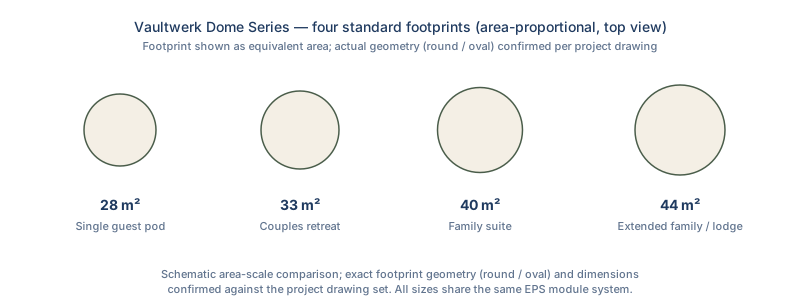
The Vaultwerk Dome Series ships in a standardised range of four primary footprints — 28, 33, 40, and 44 m² — plus larger combined and elongated configurations available on request. Standardisation matters in procurement: it shortens quote cycles, makes freight predictable, and lets a buyer plan a multi-unit site against a known set of footprints rather than a custom drawing for every dome.
| Size | Footprint geometry | Approx. plan dimensions | Typical use | Container loading |
|---|---|---|---|---|
| 28 m² | Round dome | ~5.6 × 5.6 m | Single guest pod, BnB unit, glamping cabin | Multiple units per 40HQ; exact count varies by packing spec |
| 33 m² | Oval dome | ~6.7 × 5.6 m | Double-occupancy or compact suite | Multiple units per 40HQ; verify with supplier per order |
| 40 m² | Round dome with picture-window detail | Confirmed in the project drawing set | Family cabin, premium suite | Per-container count specified per quote |
| 44 m² | Oval dome with eave / cantilever detail | ~7.9 × 5.7 m | Lodge, public-area pavilion | Per-container count specified per quote |
Ready to compare layouts? See the Vaultwerk Dome Series floor plans and models.
Why standardised SKUs matter for buyers. Quotes turn around faster because the supplier is pricing a known module count and packing plan rather than a one-off geometry. Freight is predictable because the panel cut list and pallet plan are repeatable. Foundation engineers can design against four known load patterns rather than a bespoke geometry every time. And site detailing — flashings, thresholds, fixture locations — becomes a library of repeatable details that improves with each project rather than starting from zero.
Assembly time is a hedged input, not a fixed promise. Factory reference documentation describes rapid on-site assembly under controlled conditions. In a real project, assembly time varies with crew size, foundation prep quality, weather, lifting equipment available, and the experience level of the assembly team. Quote scope should specify whether the supplier is providing assembly supervision, training, full installation crew, or none — and what tools and consumables the buyer must provide on site (see also the Logistics & assembly chapter to come).
Mix-and-match SKU layouts
“Mix-and-match” in the Dome Series context means a specific procurement capability: standard SKUs can be physically connected at the structural envelope level into a single multi-volume building, not just placed adjacent on the same deck. This is the differentiating feature that separates an EPS modular dome system from fabric dome clusters (which connect only through fabric walkways) and from geodesic kit domes (which are geometry-locked at their nominal diameter).
For resort developers, this capability maps directly onto how guest layouts actually get built: a 28 m² unit connected to a 40 m² unit becomes a honeymoon-and-living suite; a 28 + 33 + 40 cluster becomes a family triplet with shared core; four 28 m² units around a shared octagonal connector becomes a small public cluster suitable for reception, lounge, or wellness areas. Standalone domes are still the easiest deployment, but a buyer evaluating long-tenure resort economics should know the system can configure beyond a uniform grid of identical units.
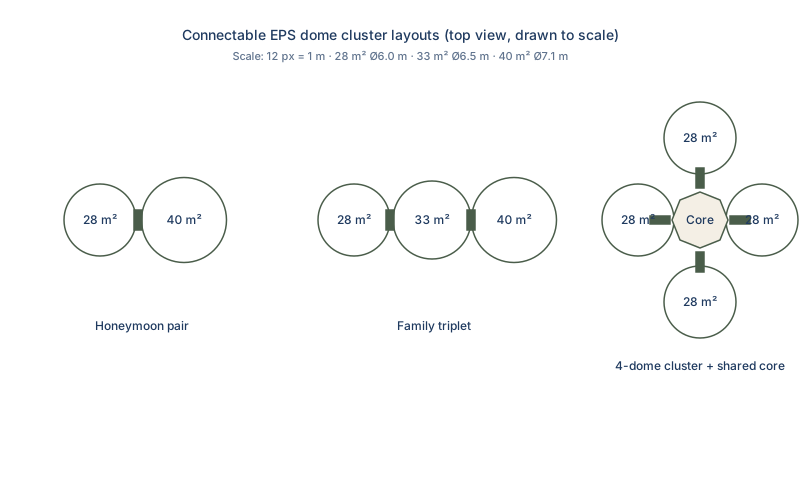
A buyer evaluating a clustered layout should treat the connection capability as a design option to verify in the quote, not as a generic blanket promise. Dome Series units connect door-to-door on a common 1150 mm connection module across all standard sizes, and connection is Dome-to-Dome only — Cabin Series and A-Series buildings do not physically connect to domes. The engineered connection points, factory-supplied joining hardware, waterproofing detail at the junction, insulation continuity, and any structural reinforcement required at the node are all project-specific items; connection-node detailing for multi-node clusters and the practical engineering ceiling on cluster size are reviewed by the manufacturing engineering team per project and should be confirmed at quote time rather than read off this page.
Preview: For glamping resorts
A resort procurement view of the Dome Series treats each unit not as a standalone product but as one component of a multi-unit hospitality asset with shared services, certification depth, lead-time risk, and a long operating hold. That framing changes which questions belong in round one of supplier screening.
The dedicated Resort Procurement Guide walks through the inputs resort developers and hotel-group project teams need to issue a clean RFQ: four unit-count tiers (1–5 / 5–20 / 20–100 / 100+), shared-space planning for connected and clustered SKUs, quote-scope language tier by tier, certification-chain expectations for hotel-brand projects, and a buyer responsibility map covering land, foundation, utilities, permits, and operating staff.
This guide deliberately stops at the input side: it defines what to look for before issuing the RFQ. The dedicated resort guide walks through execution at unit-count tier resolution.
Read next: Prefab Dome House for Glamping Resorts
A resort-procurement guide for site planning, SKU mix, connection-node scope, logistics, revenue framing, and unit-count tier routing.

Preview: EPS vs PVC TCO
Total cost of ownership (TCO) for a glamping or resort dome is the comparison between day-one unit price and the full cost of holding the asset over a planning horizon, typically modelled at 10 years for permanent or long-lease sites. The day-one number is the easiest to compare and the easiest to mislead with — quote-scope parity across vendors is the input that separates a real comparison from an apples-to-oranges one.
The EPS vs PVC TCO guide builds the model across nine variables — initial unit, export packaging, freight, foundation, installation, maintenance, replacement, downtime, and energy load — applied tier by tier (shell-only, ready-to-move-in, turnkey). The output identifies which planning horizons make a fabric-cover business case work and which favour an insulated modular envelope. The cheaper day-one product can become the more expensive operating asset once cover replacement, downtime, and year-round energy load are modelled across a multi-year hold.
The TCO guide is already published; readers planning a 5- to 100-unit project should treat it as required reading before any quote conversation.
Read next: EPS Dome vs PVC Dome Lifecycle Cost
A procurement-grade comparison by quote scope, lifespan, maintenance, replacement, downtime, and energy load over a 10-year resort hold.
EPS dome vs geodesic dome kit
Buyers comparing dome options for a resort or glamping project usually have three product families on the shortlist: fabric-cover PVC domes, geodesic frame kits, and solid-wall EPS modular domes. The PVC comparison is handled in the TCO guide above. This section separates the EPS modular dome from the geodesic kit, because search results and marketplace listings routinely group both under “dome house” while they are structurally different products solving different briefs.
A geodesic dome is a triangulated frame: struts and hub connectors form a self-supporting lattice, closed with rigid panels or a tensioned cover, and insulated as a separate build step. The geometry is genuinely strong and material-efficient — that part of the marketing is true. The procurement trade-offs sit elsewhere. The envelope is assembled from many chord junctions, so long-term weatherproofing and air-sealing depend on the sealing detail at every joint of the lattice. The thermal envelope is whatever the builder adds to a triangulated surface, which makes insulation a site-built variable rather than a factory property. And the geometry is locked at its nominal diameter: multi-unit geodesic layouts are usually planned as separate shells or project-specific connectors rather than a factory-standard multi-volume SKU system.
An EPS modular dome — sometimes surfaced in supplier search results as a monolithic EPS dome, not to be confused with poured-concrete airform monolithic domes — inverts those trade-offs. The insulation is the wall: solid 18 cm graphite-EPS modules (core RSI 5.6 ≈ US R-32; a core material value, not a whole-assembly R-value) lock together into a monolithic-form shell, finished with mesh, alternating crack-resistant mortar layers, and a waterproof render as one factory-specified system rather than a site-assembled stack of trades. Standard Dome Series sizes also share a common connection module, so 28–44 m² units can be joined door-to-door into linked suites — the layout capability covered in the Mix-and-match chapter above.
| Decision variable | Geodesic dome kit | EPS modular dome |
|---|---|---|
| Structure | Triangulated strut-and-hub lattice | Solid interlocking EPS modules, monolithic-form shell |
| Thermal envelope | Added separately to the frame; varies by builder | The wall itself; insulation is a factory material property |
| Weatherproofing | Joint-by-joint sealing across the lattice | Continuous mesh + mortar + waterproof render system |
| Layout flexibility | Fixed at nominal diameter; units placed adjacent | Standard sizes connect into one multi-volume building |
| Typical assembly | Frame erection plus separate envelope and insulation trades | Module locking (2-hour factory reference) plus finish system; site prep separate |
| Best fit | DIY budgets, greenhouses, event spaces, large clear spans | Year-round bookable guest units, insulated permanent hospitality stock |
Neither product is universally better; they answer different briefs. If the project is a seasonal event space or a self-build on a tight budget, a geodesic kit is often the right tool. If the search started at “geodesic dome house” but the actual requirement is a bookable, insulated, year-round guest unit that a finance reviewer can model over a 10-year hold, the comparison to run is quote scope and lifecycle cost — and the EPS modular envelope is the product built for that brief.
Preview: Year-round insulated dome
Year-round operation is the planning assumption that drives envelope selection more than any other input. A unit operated only in shoulder seasons can tolerate a lighter envelope and a heavier reliance on portable heating or cooling; a unit operated through winter and summer in a climate with meaningful temperature swing has to carry the thermal load in the building itself, not in the HVAC plant.
The year-round insulated dome workflow goes through the envelope decision variables — R-value or U-value design intent, climate-zone modelling, air-sealing detail at the joinery, infiltration rates, and HVAC sizing — and shows how each input shifts when the brief moves from seasonal to year-round. Specific numbers are project-specific: the right R-value for a Catskills site differs from the right R-value for a coastal Australian site, and both differ from a central-Asian inland site. In practice, the four-season modelling workflow should combine third-party data sources for EPS thermal performance with local code references for permanent insulated structures in the target market.
For deeper procurement-focused engineering on the cold-climate end of that operating envelope — R-value baselines, connection-node thermal envelope and air-sealing detailing, and a heating-cost framework for heating-heavy markets — see the dedicated guide on the insulated dome house for cold climates.
Certifications, code compliance, and what we don’t promise
Certification in an international procurement context is a paperwork mapping problem between the standard a product was tested to in the country of manufacture and the standard the destination market requires for code compliance — and those two standards are almost never directly interchangeable. This chapter is hedged on purpose: the operating risk of overstating certification coverage falls on the buyer at permit time, not on the supplier at quote time.
What factory documentation includes. Factory-issued documentation for the Vaultwerk Dome Series EPS module references a B1 fire classification under the Chinese national standard GB 8624 and an SGS RoHS / material-safety report covering specified material properties. CE / EU Declaration of Conformity is not used as a public certification claim until original EU documents are verified for the quoted route. These documents do not substitute for destination-specific approvals; they provide an evidence base for a local code consultant’s review. The current document status — what exists, what each report covers, and what is shared at inquiry stage — is published on our evidence & spec brief page.
Destination-specific testing is the buyer’s reality. In the US, combustible exterior wall assemblies typically require ASTM E84 for surface burning characteristics (Steiner Tunnel) and, beyond certain heights and occupancy classes, NFPA 285 — an assembly test, not a component test, dependent on the specific wall build-up including studs, sheathing, and detailing at door and window openings.16 An EPS module passing a component test still requires assembly-level testing for the wall system. In the UK and Ireland, the route is EN 13501-1 under CPR with site-specific assessment. In Canada, the pathway uses CSA A277 for factory certification and ULC-S102 for surface burning. In Australia, bushfire-prone projects require an AS/NZS 3959 BAL assessment with an envelope detail matching the assigned BAL rating. None of these are satisfied by a GB 8624 or CE document alone.
What CE marking does not do. CE marking is a European conformity mark for the EU and EEA markets. The US National Institute of Standards and Technology (NIST) frames CE marking as a European conformity mechanism: it does not demonstrate compliance with North American safety standards or installation codes, and US compliance is governed by separate local standards.17 US jurisdictions typically reference UL safety standards; contractors and inspectors look for the UL mark, ASTM test results, or NFPA assembly results, not a CE document. The same one-way logic applies in reverse for Australian, Canadian, and New Zealand pathways.
Vaultwerk’s position. We coordinate the handover of factory certification documents and can introduce buyers to destination-side compliance consultants. We do not guarantee destination compliance — that requires the buyer’s local code consultant, a registered engineer in the jurisdiction, and a local permit from the authority having jurisdiction.
Structural and seismic note. The dome geometry and lightweight EPS module body are part of the manufacturer’s seismic design rationale. Vaultwerk does not publish a tested seismic-magnitude rating, and the product should not be described as tested to magnitude 8 or to any specific seismic intensity. Real-site seismic, wind, and snow performance depends on foundation design, anchoring, openings, local loads, and code review by a registered engineer in the destination jurisdiction. Factory documents can support that review, but final structural compliance must be established in project documents, not inferred from a generic product page.
Quote scope language (shell / ready / turnkey + buyer-supplied items)
Quote scope is the contract-level language that defines what is inside the supplier’s price and what the buyer must arrange separately, expressed across three standard tiers — shell-only, ready-to-move-in, and turnkey — with an explicit buyer-supplied items list. Without that language, two quotes cannot be compared on the same basis, and the gap between stated price and operational cost stays hidden until the project is already underway.
| Tier | What’s included | What’s NOT included | Typical buyer-supplied items |
|---|---|---|---|
| Shell-only | EPS modules; structural joinery and connection hardware; mesh, mortar, and exterior coating to factory spec; factory-issued documentation (GB 8624 B1 fire report + SGS RoHS; CE / EU DoC not claimed until verified). | Foundation; electrical; plumbing; HVAC; glazing where not part of shell scope; interior finishes; sanitary fixtures; on-site assembly labour; destination-specific certification. | Foundation engineering and pour; local electrical and plumbing rough-in; glazing supply and install; sanitary fixtures; interior finishes; assembly crew; site logistics. |
| Ready-to-move-in | Shell scope plus basic interior finishes, basic electrical and plumbing rough-in to factory layout, glazing per project drawing, sanitary fixture rough-in. | Foundation; on-site assembly labour; HVAC commissioning; destination-specific certification applications; project-specific custom interiors. | Foundation engineering and pour; local utility connections to the unit boundary; HVAC unit supply and commissioning; final furniture and FF&E; certification consultant fees. |
| Turnkey | All ready-to-move-in scope plus on-site assembly with factory supervisory support. Foundation works and destination-specific certification applications are arranged through a buyer-engaged local project partner, separately quoted; Vaultwerk does not perform local general contracting or certification work directly. | Local general contracting; destination certification applications performed by Vaultwerk; project design and architectural service; land acquisition; operating licences; FF&E and operational furniture beyond included scope. | Land; local project partner for foundation and certification work; design and master-planning service if not in scope; operating licences; FF&E; staffing. |
| All tiers — checklist | Local building permit; foundation engineering by a registered local engineer; utility connections to the unit boundary; site access and crane logistics; assembly tools and consumables (shell-only / ready tiers); construction insurance; FF&E. | — | — |
Quote-scope parity is the single most important RFQ step. A shell-only price from supplier A against a ready-to-move-in price from supplier B can create a large apparent price gap that does not exist once scopes are aligned, and that mismatch frequently distorts which supplier “won” the RFQ. Require every shortlisted vendor to quote the same tier against the same buyer-supplied items list.
Vaultwerk quotes by tier, destination, unit count, and certification scope; the contract reflects the same structure. The full pricing logic — what moves a quote up or down, order-size tiers, and what is normally excluded — is published at how EPS dome quotes are scoped.
Site & installation checklist
The dome shell is one part of a buildable resort or operator project — foundation work, waterproofing, interior fit-out, MEP routing, and door / window detailing all sit on the boundary between the Vaultwerk dome package and what the buyer’s local team prepares on site. The standard factory quote is EXW-based and deliberately narrow: it includes the entry door but not the ground foundation, interior doors, surface painting, or water and electrical materials. The five categories below are the ones most often missed during early RFQ planning; naming them up front lets the inquiry conversation start scoped instead of renegotiating mid-project.
| Category | Dome package (factory scope) | Site-specific (buyer-supplied) | Engineering review |
|---|---|---|---|
| Foundation | Module load reference data and the anchoring interface from manufacturing engineering. The foundation itself is not included in the standard EXW package. | Soil bearing capacity, frost depth, groundwater, slope grading, and the foundation pour itself. | A registered local engineer signs off on the foundation design against the module load reference. |
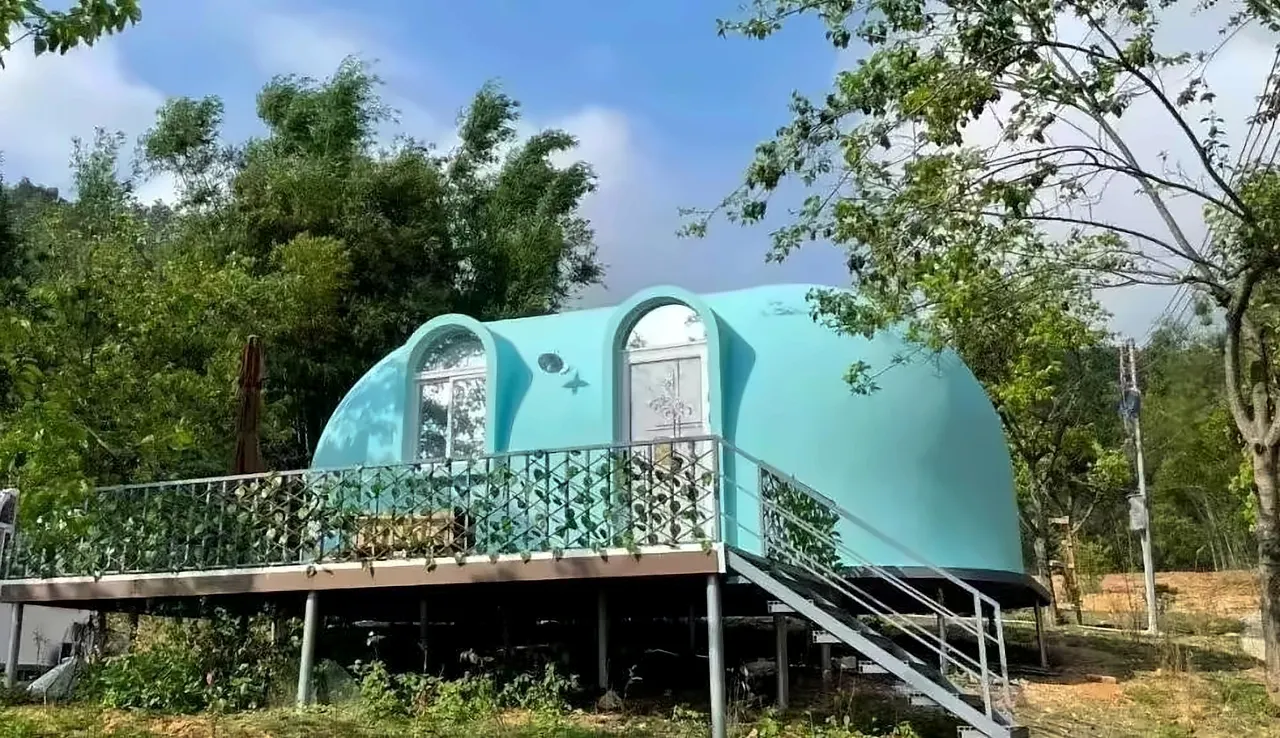
| Waterproofing | Factory finishing system: module joints filled and meshed, alternating crack-resistant mortar and mesh layers, a waterproof membrane applied inside and out, and a finished render coat. The arched geometry sheds water rather than pooling it; gentle-slope roof variants have drainage slope built in at the render stage. | Climate exposure data, drainage path to grade, and any roof junctions the site design introduces. | Local code consultant reviews the assembly against destination weather data; assembly detail questions are reviewed at inquiry stage. |
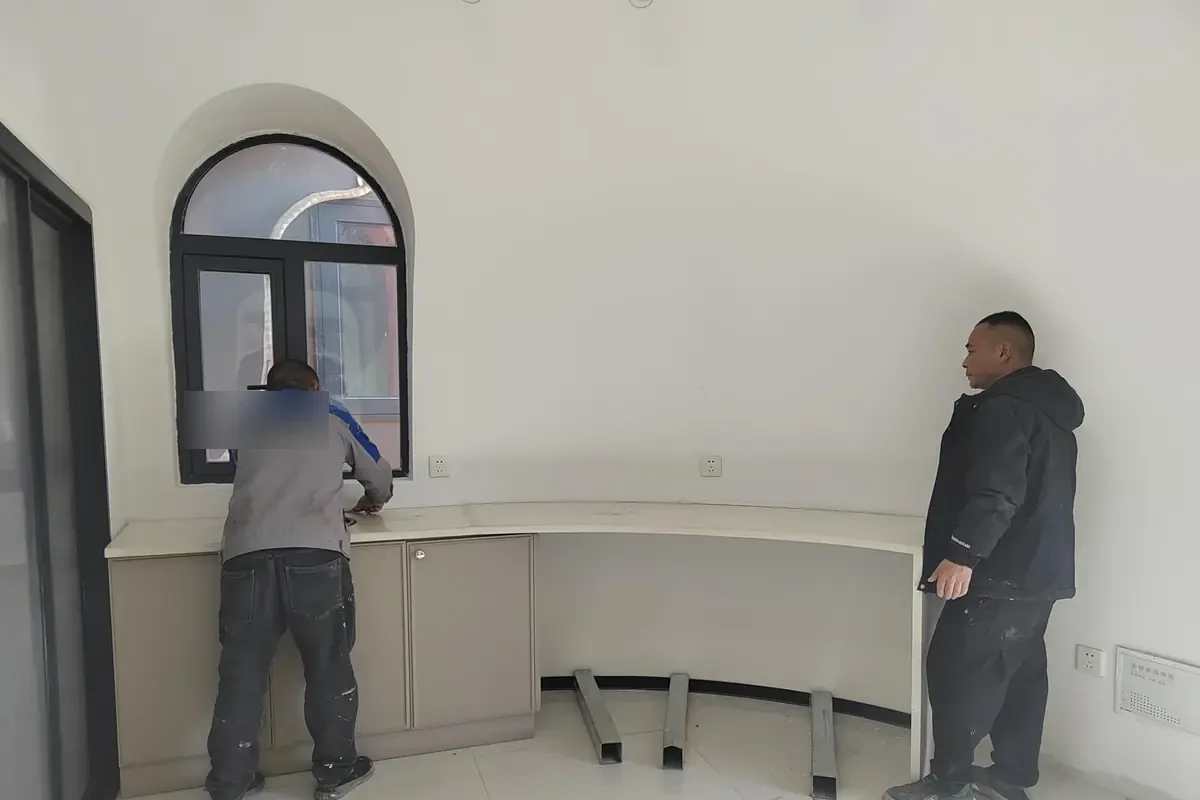
| Interior fit-out | Entry door included at every tier. Interior doors, surface painting, and interior finishes are excluded at shell-only scope; ready-to-move-in adds basic finishes to the factory layout. | Operator finish standards, FF&E choices, and any custom partitioning. | Local fit-out contractor follows the factory sequence for the chosen quote tier. |
| MEP routing | Water and electrical materials are not part of the standard EXW package; basic rough-in to the factory layout enters at ready-to-move-in scope. | Utility connections to the unit boundary, local code rough-in, HVAC unit sizing and commissioning. | Penetration placement and loads are routed to project engineering review. |
| Doors and windows | Entry door in shell scope; window openings per project drawing. Larger glazing areas slightly reduce overall thermal performance, so flag enlarged-window layouts at quote stage. | Destination-specific opening, egress, thermal, and fire-safety requirements where applicable. | Vaultwerk reviews dome-compatible options with the project team before pricing. |
Final foundation, waterproofing, MEP, and door / window decisions stay with the project engineer and the local code consultant in the destination jurisdiction. Vaultwerk’s role is to bring the manufacturer reference, route project-specific questions to manufacturing engineering, and keep quote scope honest so RFQ comparisons stay on the same basis.
Request a project quote → — share unit count, destination, intended use, and target scope tier, and the first reply will name which checklist items sit with your local team versus the dome package.
Logistics & assembly
Logistics for the Vaultwerk Dome Series covers the chain from factory pickup in China through FOB loading at the export port to discharge at the buyer’s destination port, plus the on-site assembly window and any reinforcement packaging required for international transit. Each link has a distinct responsibility owner, and the quote scope above determines which links sit with Vaultwerk and which sit with the buyer.
Container loading. Dome Series shells ship in standard 40-foot high cube containers. Per-SKU loading is a function of unit footprint, current packaging revision, and any export reinforcement framing; smaller footprints load more units per container than larger ones, and combined configurations (28+33 or 28+44 layouts) load fewer.18 Exact unit-per-container counts are confirmed on each quote against the destination port and packaging specification rather than published here. Export reinforcement framing — timber or steel — is quoted as a separate line item and is required for most international destinations beyond short regional shipping.
Site assembly time. Assembly time varies with crew size, foundation preparation status, weather, site access, lifting equipment, and crew experience. Factory documentation references controlled-condition times for trained crews; on-site totals — including foundation curing, finishes, mechanical and electrical rough-in, and any certification work — are project-specific and not guaranteed by Vaultwerk. Quote scope should specify whether the supplier is providing assembly supervision, training, full installation crew, or none, and which tools the buyer must provide on site.
Buyer responsibilities at the destination. Beyond the factory and container, the buyer is responsible for destination port handling, customs clearance and duties, inland freight, crane and lifting equipment, local assembly labour where not contracted to Vaultwerk, foundation engineering and pour, utility connections, and any local permit or certification applications. These are destination-specific costs, not factory costs, and they should be budgeted before the unit quote is signed.
Project logistics estimates are quoted with the unit estimate. Include destination port, project unit count, and any access constraints (road width, crane access, lift height) in the inquiry so the logistics scope can be priced accurately the first time.
Related guides
- EPS Dome vs PVC Dome Lifecycle Cost — procurement-grade comparison by quote scope, lifespan, maintenance, replacement, downtime, and energy load over a 10-year resort hold. Published.
- Prefab Dome House for Glamping Resorts — site planning, SKU mix, connection-node scope, logistics, revenue framing, and unit-count tier routing. Published.
- Prefab Dome Supplier Due Diligence Checklist — the vendor-neutral questions to ask any dome supplier on product, certification, quote scope, track record, logistics, site, and multi-unit capability before an RFQ. Published.
- Insulated Dome House for Cold Climates — climate-zone modelling, R-value / U-value design intent, operating range vs installation window, and HVAC sizing for permanent EPS dome operations. Published.
- EPS Dome vs Geodesic Dome — geometry, joinery, and code paths. In development.
- Fire-Resistant Dome Cabin — assembly-test pathways in the US and EU. In development.
Footnotes
-
Grand View Research, “The United States Glamping Market Size & Outlook, 2033,” 2026. The page reports USD 829.4 million revenue in 2025, projected to USD 2,055 million by 2033 at a CAGR of 11.9 percent over the 2026–2033 forecast period. https://www.grandviewresearch.com/horizon/outlook/glamping-market/united-states (accessed 2026-05-31). ↩
-
Marriott International, “Marriott Acquires the Postcard Cabins Brand: A New Chapter for Outdoor Hospitality,” PR Newswire, 12 December 2024; Skift, “Marriott Buys Startup Postcard Cabins to Help Create Outdoor Lodging Brand,” 12 December 2024. https://www.prnewswire.com/news-releases/marriott-acquires-the-postcard-cabins-brand-a-new-chapter-for-outdoor-hospitality-302330192.html / https://skift.com/2024/12/12/marriott-buys-startup-postcard-cabins-to-help-create-outdoor-lodging-brand/ (accessed 2026-05-31). ↩
-
Hilton, “Hilton Partners with AutoCamp to Offer Elevated Outdoor Lodging Experiences in Iconic Natural Settings,” 27 February 2024; Skift, “Hilton Adds AutoCamp in Loyalty Licensing Deal for U.S. Glamping,” 27 February 2024. https://stories.hilton.com/releases/hilton-partners-with-autocamp-to-offer-elevated-outdoor-lodging-experiences-in-iconic-natural-settings / https://skift.com/2024/02/27/hilton-adds-glamping-via-loyalty-licensing-deal-with-autocamp/ (accessed 2026-05-31). ↩
-
Hyatt Newsroom, “Be More Outdoors: World of Hyatt Announces Exclusive Alliance with Under Canvas,” July 2024; Hotel Management, “New Hyatt partnership adds glamping options.” https://newsroom.hyatt.com/undercanvas / https://www.hotelmanagement.net/operate/hyatt-introduces-luxury-glamping-partnership (accessed 2026-05-31). ↩
-
Modern Campground, “Glamping ADR Hits $251/Night as Guest Stays Lengthen — Insights from Glamping Show Americas 2025,” citing Cairn Consulting Group, 2025. https://moderncampground.com/usa/colorado/glamping-adr-hits-251-night-as-guest-stays-lengthen-amenities-evolve-insights-from-glamping-show-americas-2025 (accessed 2026-05-30). ↩
-
Grand View Research, “Glamping Market Size, Share & Trends Analysis Report, 2026–2033,” 2025. https://www.grandviewresearch.com/industry-analysis/glamping-market (accessed 2026-05-30). ↩
-
McKinsey & Company, “Putting the Pieces Together: Unlocking Success in Modular Construction,” and Fortune Business Insights, “Modular Construction Market Report,” 2024–2025. https://www.mckinsey.com/industries/engineering-construction-and-building-materials/our-insights/putting-the-pieces-together-unlocking-success-in-modular-construction (accessed 2026-05-30). ↩
-
Mordor Intelligence, “Prefabricated Housing Market,” and Market Research Future, “Prefabricated Buildings Market,” 2024–2025. https://www.mordorintelligence.com/industry-reports/global-prefabricated-housing-market / https://www.marketresearchfuture.com/reports/prefabricated-buildings-market-5171 (accessed 2026-05-30). ↩
-
CAS Fire, “GB 8624 and EN 13501-1 Comparison,” and RISE (Research Institutes of Sweden), “European Fire Classification.” http://www.casfire.cn/en/?stm_event=gb-8624-and-en-13501-1 / https://www.ri.se/en/expertise-areas/expertises/european-fire-classification (accessed 2026-05-30). ↩
-
Timber Pro Coatings USA, “ASTM E84 / CAN/ULC-S102 / EN 13501-1 Cross-Recognition Guide,” and T-FIT, “Application Profile 35: Euroclass and ASTM E-84.” https://www.timberprocoatingsusa.com/educational-article/astm-e84-can-ulc-s102-en13501-guide (accessed 2026-05-30). ↩
-
Rmax, “NFPA 285 Overview,” and NGC Testing Services, “Understanding NFPA 285 Pass/Fail Criteria.” https://www.rmax.com/blog/nfpa-285 / https://www.ngctestingservices.com/blog/understanding-nfpa-285-pass/fail-criteria (accessed 2026-05-30). ↩
-
Third-party China GB 8624 reaction-to-fire and physical-performance report 202201000206 (issued 2022-04-18, valid to 2028-04-06), classifying the graphite-modified EPS module (1400×700×180 mm) as B1 (C-s3, d1) under GB 8624-2012, tested per GB/T 20284 (SBI) and GB/T 8626 (small-flame ignition). Report on file; shared at inquiry stage. A China GB-standard test, not an EN 13501-1 / EU notified-body certificate. ↩
-
ASTM International, “ASTM C578 — Standard Specification for Rigid, Cellular Polystyrene Thermal Insulation,” and Rmax, “ASTM C578 Reference Guide.” https://store.astm.org/c0578-23.html / https://www.rmax.com/blog/astm-c578 (accessed 2026-05-30). ↩
-
NeoGraf Solutions, “Polystyrene Insulation R-value Enhancements Using Graphite Powder and Graphene Nano-Platelets,” and Ecohome, “Graphite-Enhanced EPS (GPS) — The Next Generation Rigid Foam Insulation.” https://www.neograf.com/wp-content/uploads/2023/06/Polystyrene-Insulation-R-value-Enhancements-Using-Graf-Graphite-Powder-Graf-X-Graphene-Nano-Platelets.pdf / https://www.ecohome.net/en/guides/4128/graphite-enhanced-eps-gps-the-next-generation-rigid-foam-insulation/ (accessed 2026-05-30). ↩
-
British Plastics Federation EPS Group, “EPS Properties,” and Thermtest, “Thermal Conductivity of EPS and EVA Foam.” https://www.eps.co.uk/applications/properties.html / https://thermtest.com/application/thermal-conductivity-of-eps-and-eva-foam (accessed 2026-05-30). ↩
-
Rmax, “NFPA 285 Overview,” and NGC Testing Services, “Understanding NFPA 285 Pass/Fail Criteria,” and Walls & Ceilings, “Specifying Rigid Foam Insulation for NFPA 285 Fire Requirements.” https://www.rmax.com/blog/nfpa-285 / https://www.ngctestingservices.com/blog/understanding-nfpa-285-pass/fail-criteria / https://www.wconline.com/articles/91145-specifying-rigid-foam-insulation-for-nfpa-285-fire-requirements (accessed 2026-05-30). ↩
-
US National Institute of Standards and Technology (NIST), “Compliance FAQs: CE Marking,” and JJR Lab, “Is CE Certification Recognized in the USA?” https://www.nist.gov/standardsgov/compliance-faqs-ce-marking / https://www.jjrlab.com/news/is-ce-certification-recognized-in-the-usa.html (accessed 2026-05-30). ↩
-
Vaultwerk Dome Series internal packing reference (factory BoM, 2026), cross-checked against the bilingual model manual’s container loading notes (1 × 40-foot high cube container loading varies by SKU). ↩
Buyer Questions
What's the difference between an EPS dome house and a PVC fabric dome?
The two systems differ across four procurement variables: envelope material, envelope lifecycle, assembly logic, and year-round suitability. An EPS dome house uses insulated polystyrene modules as both the structure and the thermal envelope, assembled on-site with interlocking joinery and finished with mesh, mortar, and coatings. A PVC fabric dome uses a tensioned membrane stretched over a steel or aluminium frame, with insulation specified separately if at all. These are different tools for different planning horizons: PVC tends to suit short-tenure or seasonal sites where a periodic cover replacement is acceptable, while EPS tends to suit permanent or long-lease sites where the buyer wants no recurring envelope-replacement event. See the EPS vs PVC TCO guide for a full 10-year comparison.
How is an EPS dome house different from a geodesic dome kit?
A geodesic dome is a triangulated strut-and-hub frame closed with panels or a cover; it is a proven structural geometry, but the thermal envelope is built up separately, weatherproofing depends on sealing many chord junctions, and the geometry is fixed at its nominal diameter. An EPS modular dome carries the insulation in the wall itself: solid 18 cm graphite-EPS modules lock into a monolithic-form shell finished with mesh, crack-resistant mortar, and waterproof render as one factory-specified system, and standard sizes connect door-to-door into linked layouts. For a year-round guest unit, the practical comparison is thermal envelope, finish system, layout flexibility, and quote scope — not the word dome.
How much does a prefab dome house cost?
A prefab dome house cost should be quoted by scope, not as one universal unit price. The useful comparison asks for the SKU footprint, unit count, destination, Incoterm, scope tier, export packaging, foundation responsibility, local labour, MEP, interiors, HVAC, and destination-specific certification items. Vaultwerk separates shell-only, ready-to-move-in, and turnkey-style scope boundaries so a buyer can compare like with like before treating any dome house cost as real.
Is a prefab dome house sold as a kit?
For Vaultwerk, the practical term is a shell package or project kit, not a consumer DIY geodesic kit. The supplier scope can include EPS modules, structural joinery and connection hardware, mesh, mortar, coatings, factory documentation, and doors or windows where the project quote includes them. Foundation, site work, utilities, permits, local assembly labour, buyer-supplied tools, destination certification, interiors, HVAC, sanitary fixtures, and FF&E must be named separately in the quote.
How long does an EPS dome house last in extreme weather?
Useful life depends on which layer of the envelope is being measured and on site conditions. The structural EPS module itself is an inert closed-cell polymer with a long expected service life when protected by mesh, mortar, and exterior coating. The finish layers (coatings, sealants, flashings) follow their own maintenance cycle. Extreme weather performance — typhoon-class wind, seismic events, heavy snow, bushfire exposure, cyclone loads — is project-specific and depends on the foundation design, anchoring detail, climate zone, and any local code uplift requirements. Site-specific structural engineering verification by a local engineer is required for any extreme-weather claim. Vaultwerk provides factory documentation to support that local review; we do not warrant performance outside it.
Can I assemble an EPS dome house myself, or do I need a contractor?
Shell assembly of an EPS dome house is best handled by a trained crew familiar with the joinery system, not a single-person DIY project. Vaultwerk recommends factory supervisory support — on-site or remote — for the first project on a buyer's site, and a separate buyer-supplied tools list is part of the factory documentation hand-over for any shell-only or ready-to-move-in scope. Beyond the shell, the buyer must engage local contractors for foundation, electrical, plumbing, HVAC, glazing where not included, and any certification or permit work in the destination jurisdiction. Quote scope should specify exactly which assembly responsibilities sit with the supplier and which sit with the buyer; see the Quote scope chapter for the language to use.
How many EPS dome units fit in a 40-foot container?
Container loading for the Vaultwerk Dome Series varies by SKU footprint, packaging revision, destination port handling, and whether export reinforcement framing is added. Factory reference loading allows multiple 28 m² shell sets per 40-foot high cube container, with larger footprints and combined configurations (such as 28+33 or 28+44 layouts) loading fewer units per container. Per-SKU container counts are confirmed on each quote against the current packing specification, the destination port, and any additional packaging required for international transit. Export reinforcement framing — timber or steel — is quoted as a separate line item and is required for most international destinations; it is not included in the base shell price.
What warranty and after-sales coverage does Vaultwerk offer?
Warranty coverage is quoted per project and stated in writing in the sales contract. Coverage scope distinguishes between the EPS module material, supplied joinery and connection hardware, included doors and windows, factory-supplied finishes, packaging and freight responsibility (which depends on the agreed Incoterm), and any on-site assembly performed under a Vaultwerk service scope. Buyer-installed elements, local utility connections, foundation work, and any modifications performed by third parties sit outside warranty scope. After-sales coordination is handled through the project contact named on the contract; specific response-time commitments and replacement-part lead times are stated in the project service-level annex, not generalised on this page.
Do you offer OEM color or branding for resort projects?
OEM and project-specific branding are not published as a standing capability for the Vaultwerk Dome Series. If a project requires OEM scope, please specify the following items in the inquiry — exterior coating colour to a supplied reference (RAL or equivalent), branding decal placement and artwork, any custom hardware finish, target minimum order quantity, target lead time, and the destination market's coating compliance requirements — and Vaultwerk will confirm feasibility, sample approval cycle, and any additional cost with the production team before the OEM scope is locked in writing. Custom geometry, structural modifications, alternate door and window sets, and material substitutions are evaluated case by case and are not part of standard OEM scope; those changes typically extend lead time and may require additional certification documentation.
Is the quoted price FOB, or does it include duties and installation?
The Incoterm (FOB, CIF, DAP, or other) and the scope of what the quoted price covers are confirmed at quote stage against the destination, unit count, and certification scope rather than published as a fixed default. Import duties, destination port handling, customs clearance, inland freight, crane and lifting equipment, local labour, foundation and site work, utility connections, local permit applications, and destination-specific certification testing (ASTM E84, NFPA 285, EN 13501-1, CSA A277, AS/NZS 3959 BAL where applicable) are destination-specific and quoted separately or arranged by the buyer's local contractors. Export reinforcement packaging is a separate line item. See the Quote scope chapter for shell-only / ready-to-move-in / turnkey tier definitions and the buyer-supplied items checklist.
What fire rating does the EPS dome module have?
The module carries a B1 classification under the Chinese national standard GB 8624-2012, with sub-metrics C-s3, d1, from a third-party reaction-to-fire report issued in 2022. Two things matter for an international buyer. First, GB 8624 B1 is not the same as a European EN 13501-1 Euroclass or a CE fire declaration — there is no one-to-one conversion, and Vaultwerk does not claim a CE or EN fire class until original EU documents are verified. Second, s3 is the highest smoke-production band in this classification context, so smoke-sensitive projects should not treat B1 as a complete fire-safety answer. For a US, Canadian, UK, or Australian permit, the destination fire test (ASTM E84, NFPA 285 assembly, EN 13501-1, ULC-S102, or AS/NZS 3959) is a separate, project-specific path. The SGS RoHS report covers material safety, not fire.